Real lessons about product and tech I learned inside a Startup house
I learned a lot about product and tech from the experience
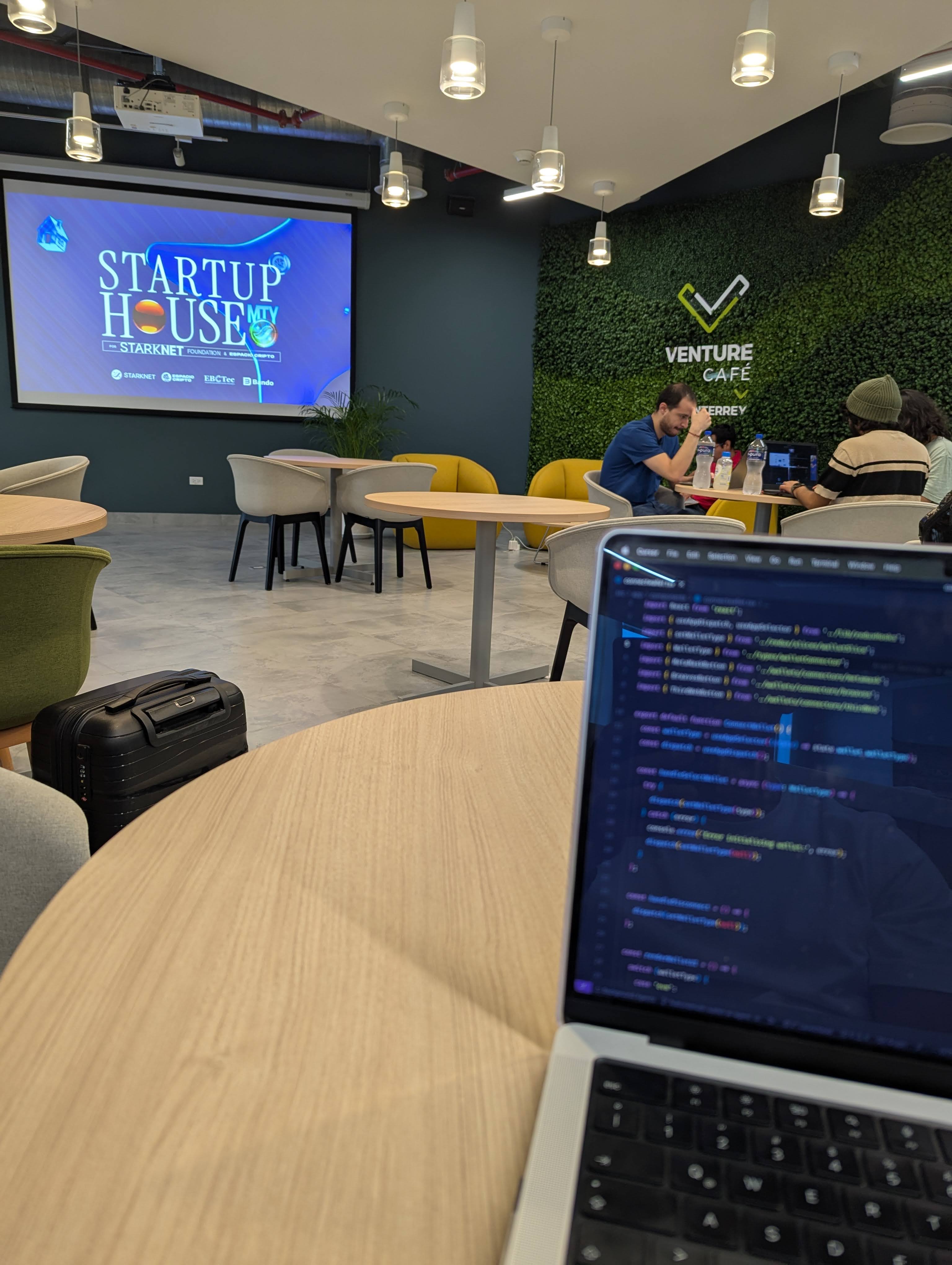
Short story
Around mid-August 2025, after my previous role ended due to company-level economic challenges, I suddenly had something I hadn’t had in years: time.
Instead of rushing into another role, I decided to experiment.
I joined a hackathon with an idea that sounded risky even to me:
a DEX with AI features to help inexperienced users avoid common (and expensive) mistakes in crypto trading.
At first, I honestly thought: this probably won’t work.
To validate the idea, I built a simple landing page while my teammates worked on a small X (Twitter) marketing campaign. I wasn’t expecting much but I got an unexpected surprise.
In just a couple of days, we had a waitlist of 30+ people.
That number might not sound impressive, but for me it was a signal. These weren't random users they were people struggling with the exact same confusion and mistakes I faced when I first entered the crypto world.
Come to the conclusion that this wasn’t just my problem.
A few weeks later, my team and I saw a post on X announcing a Startup House at Tecnológico de Monterrey, Mexico. I decided to apply with a simple mindset: why not?
I was free to experiment, and best case scenario:
- we get feedback
- we make connections
- maybe even secure a small grant
We got accepted.
Here are the most important lessons I took from the event especially while refining our pitch and talking to founders, mentors, and investors.
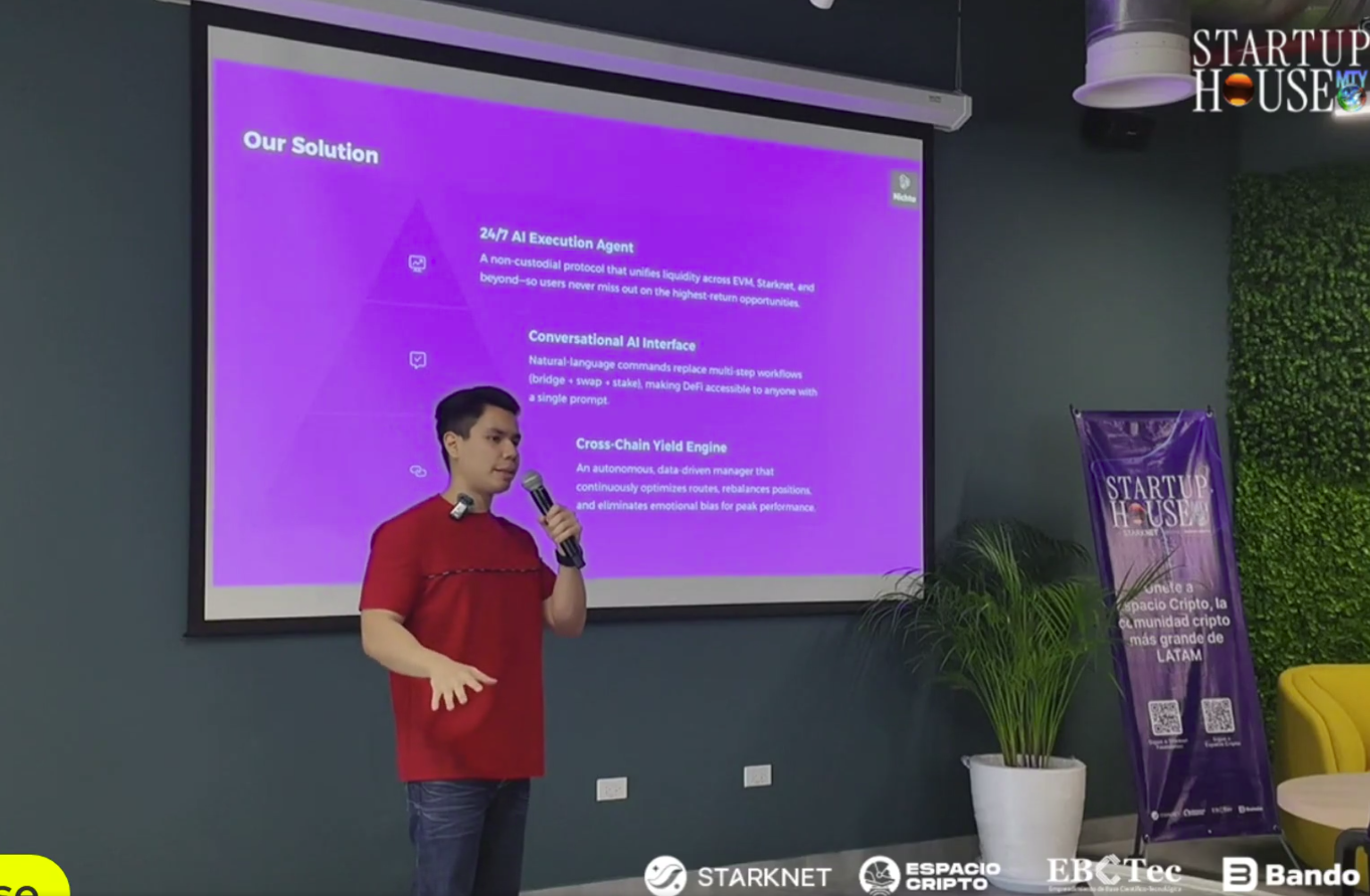
Key highlights and lessons
1. Networking is one of the fastest paths to opportunity
This sounds obvious, but seeing it in action made it real.
Many investment conversations didn’t start from decks they started from conversations.
Also:
yes, answering your business emails fast actually matters :)
2. Go-to-market matters earlier than you think
I used to believe GTM was something you worried about after building.
What I saw was the opposite:
teams with weaker tech but clearer distribution plans got more attention.
3. A clunky product beats a perfect idea
It’s better to show a rough but working app than a beautiful concept.
Even investors at pre-seed want to see:
- basic functionality
- real user flow
- proof that something exists
Perfection can wait. Validation can’t.
4. Your pitch is not about features — it’s about clarity
A good pitch doesn’t explain everything.
It explains:
- what problem exists in the real world
- who feels it
- why your solution is different
Clear storytelling beats technical depth here.
5. Valuations are relative
There's no single "correct" valuation.
What matters is:
- stage
- traction
- narrative
- timing
Understanding this removes a lot of unnecessary anxiety.
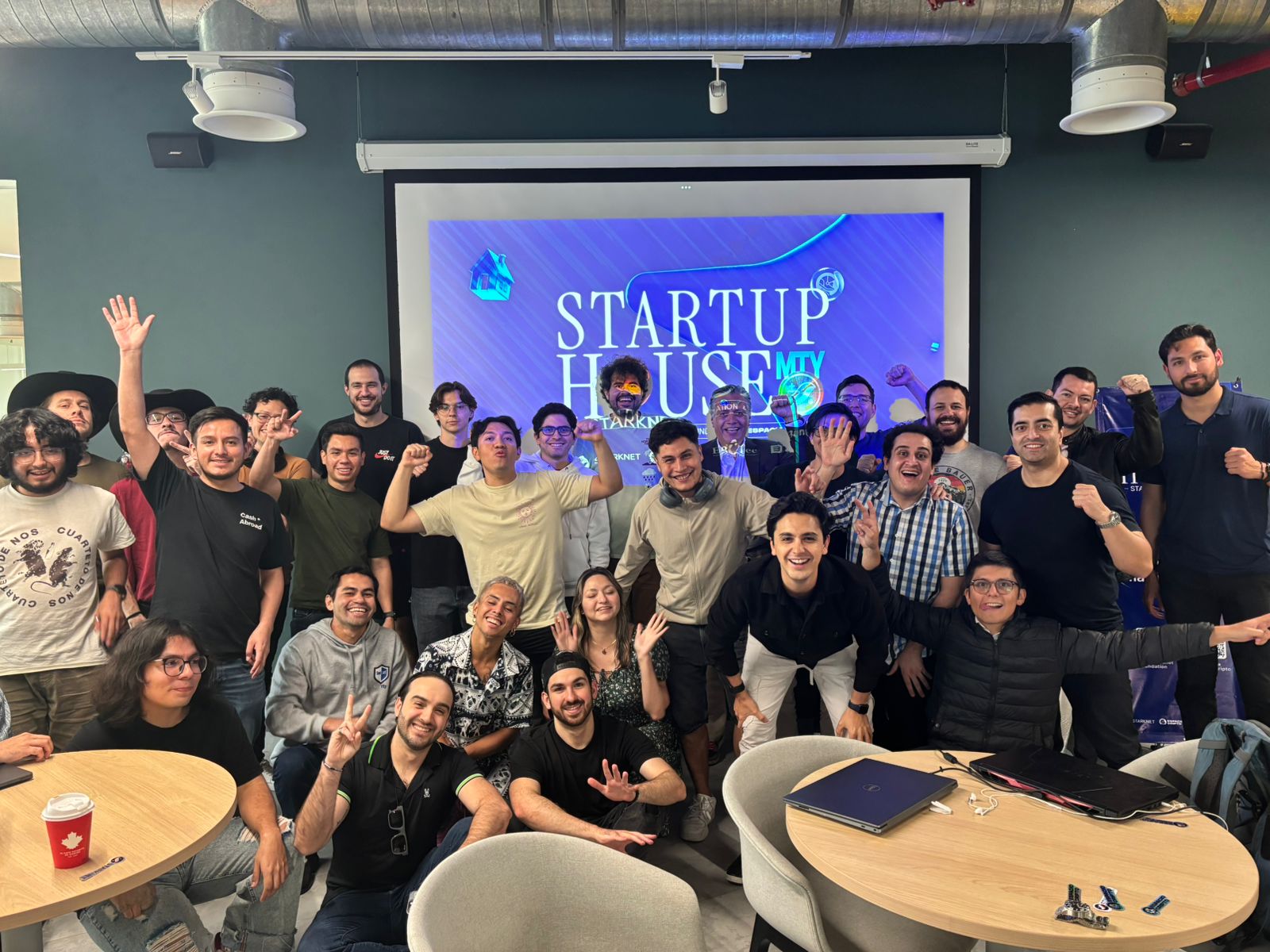
Final thoughts
We didn't get a grant, our product was still too early.
But we did get something more valuable:
- exposure
- real feedback
- contacts
- and experience building and pitching in the real world
That kind of experience, pressure, and human interaction is something no AI can generate for you.
And that alone made it worth it.
As a side note: The project I worked on during this experience is called Himera, an early-stage DEX exploring how AI can help users make safer trading decisions. I'll share more learnings as it evolves. Himera
Thanks for reading.